
Is Brazil About To End Crypto’s “Move Fast And Break Things” Era?

Stablecoins aren't just a fintech trend in Brazil—they’ve become how families send remittances, pay for services abroad, and escape bank fees that could reach 5.38% per transaction.
If you’re running a fintech in Lagos, a remittance service in Jakarta, or a payments platform in Nairobi, what happens in São Paulo over the next 90 days might be a preview of your future.
Brazil is about to kill a $42 billion shadow economy without banning anything. No dramatic crackdown, no crypto prohibition, no “protect the children” moral panic. Just a quiet regulatory reclassification that makes everyone playing in the grey zone suddenly very visible. And very taxable.
This is what the end of crypto’s “move fast and break things” era looks like.
On November 10, 2025, Brazil’s Central Bank published a 47-page technical resolution that most people scrolled past. Buried in Article 12 was a line that would effectively end years of workarounds: fiat-pegged virtual assets used for payments would now be classified as foreign exchange operations.
No fanfare. No press conference. Just regulatory language that redefined what it means to send USDT across borders – and crucially, what it means to tax it.
Within hours, Telegram channels that had spent years matching Brazilian reais to stablecoins started doing different math. Not whether to shut down, but what February 2, 2026 would mean for their margins when compliance stops being optional.
The numbers that got Brasília’s attention
Brazil’s crypto market moved R$227 billion (roughly US$42–43 billion) in the first half of 2025 alone. That’s a 20% increase year-over-year, and it happened while traditional FX flows were staying relatively flat.
More revealing: about two-thirds of that volume was stablecoins, not bitcoin speculation. USDT had quietly become infrastructure – the rails for paying Chinese suppliers, settling cross-border invoices, moving money when banks said no or took too long. PYMNTS and others have already started calling this out as Brazil’s “stablecoin boom.”
Somewhere in Brazil’s Federal Revenue Service, an analyst started noticing the mismatch. Shipping containers were arriving at Santos port. Customs paperwork showed goods entering the country. But the foreign exchange flows that should have accompanied those imports – the bank wires, the documented FX transactions – weren’t showing up in the expected places.
They were happening. Just not where the tax authority could see them.

Santos Port, Brazil's largest container terminal. The goods keep arriving—but the foreign exchange flows that should accompany them started disappearing from official channels years ago
What a shadow dollar actually looks like
Walk into any commercial district in São Paulo and you’ll find small importers who’ve never touched a traditional FX broker in years. They know someone who knows someone in a Telegram group. Send reais via Pix, receive USDT, pay the supplier in Shenzhen. Settlement in minutes, not days. No forms, no bank fees, no questions about why a small electronics shop is importing more than its books might suggest.
The system worked because everyone involved was technically following the rules – or at least, not obviously breaking them. Crypto wasn’t illegal. Paying suppliers abroad wasn’t illegal. And stablecoins existed in that peculiar space where they weren’t quite foreign currency, weren’t quite securities, and definitely weren’t subject to Brazil’s IOF financial transaction tax in the same way as bank FX.
That tax – the IOF – is almost a character in Brazilian financial life. It shows up on credit card statements for foreign purchases, typically 5.38% on transactions. It’s the line item CFOs complain about when budgeting FX operations. Everyone who’s ever used a Brazilian bank knows it’s there.
Except if you used USDT, it wasn’t.
The legal skeleton was already there
Brazil’s Law 14.478/2022 had actually given regulators the tools they needed. It defined virtual assets, set out guidelines for virtual asset service providers, updated the criminal code to cover fraud involving crypto. The framework existed.
What was missing was the political decision to actually use it.
That changed when the volume became impossible to ignore. When FATF and GAFILAT’s 2023 mutual evaluation noted that Brazil understood its money laundering risks well but flagged cross-border flows through new technologies as emerging pressure points. When the Finance Ministry started calculating how many billions in potential tax revenue were flowing through channels that looked like FX but weren’t being treated like FX.
The Central Bank’s November resolution wasn’t creating new authority. It was finally exercising the authority Parliament had already granted. Their own release spells out how Resolutions 519, 520 and 521 operationalise the law.

The grey zone that allowed $42 billion in annual transactions to operate outside traditional oversight is closing. Not because crypto failed—but because it succeeded enough to matter.
February 2, 2026 is the date that matters
That’s when the new rules take effect. From that date, VASPs will need authorisation to operate. They’ll face the same AML/CFT obligations as traditional financial institutions – governance, internal controls, security, consumer protection. Demarest’s briefing on BCB Resolution 520/521 walks through the authorisation requirements in English.
More significantly, many crypto-fiat trades and stablecoin payments will be reclassified as foreign exchange operations. Which means they’ll need to be reported to the Central Bank. Which means they’ll become visible in ways they never were before. Reuters summed it up as “defining fiat-pegged virtual-asset transactions as FX.”
And that’s where the IOF question comes in.
According to reporting from Reuters and other outlets, Brazil’s Finance Ministry is actively working on extending IOF to certain cross-border transfers using virtual assets – particularly those being used to import goods or pay for services abroad, where the economic substance is clearly an FX transaction even if the form is crypto.
The fiscal logic is straightforward: if you’re moving the economic equivalent of dollars to pay for real goods, why should the tax treatment be different just because the dollars are digital?

The question isn't whether to comply with the new rules—it's whether their systems can adapt fast enough before the deadline.
What “compliance” means when wallets become accounts
For institutions operating in this space – whether they’re banks that dipped into crypto services, fintechs built on stablecoin rails, or exchanges trying to stay relevant – the shift is architectural.
You can’t just screen a name and call it KYC anymore. Wallets have transaction histories. They interact with other wallets that have their own risk profiles. They cluster around high-risk exchanges or sanctioned addresses. They show patterns – lots of small inflows then one big outflow, constant round-tripping, relationships with known money mules.
The tooling that worked when crypto was a niche hobby doesn’t work when you’re processing the equivalent of corporate FX flows. You need the capacity to trace funds across chains, understand counterparty risk when the counterparty is an address not a company, flag behaviour that looks like structuring even when it’s happening on a blockchain not in a bank. (FATF’s virtual-assets implementation updates read very differently when you realise this is the world they’re assuming.)
This is what “treat wallets like accounts” actually means in practice. Not philosophically – operationally. With the same expectations for monitoring, reporting, and explaining to auditors what you saw and what you did about it. Anqa has been building for exactly this world: tools like the Crypto Investigator module are designed to let smaller banks, fintechs and remittance firms see wallet histories the way they already see account histories – so when the rules shift, they’re not scrambling to retrofit controls onto a system that was never built for this level of visibility.
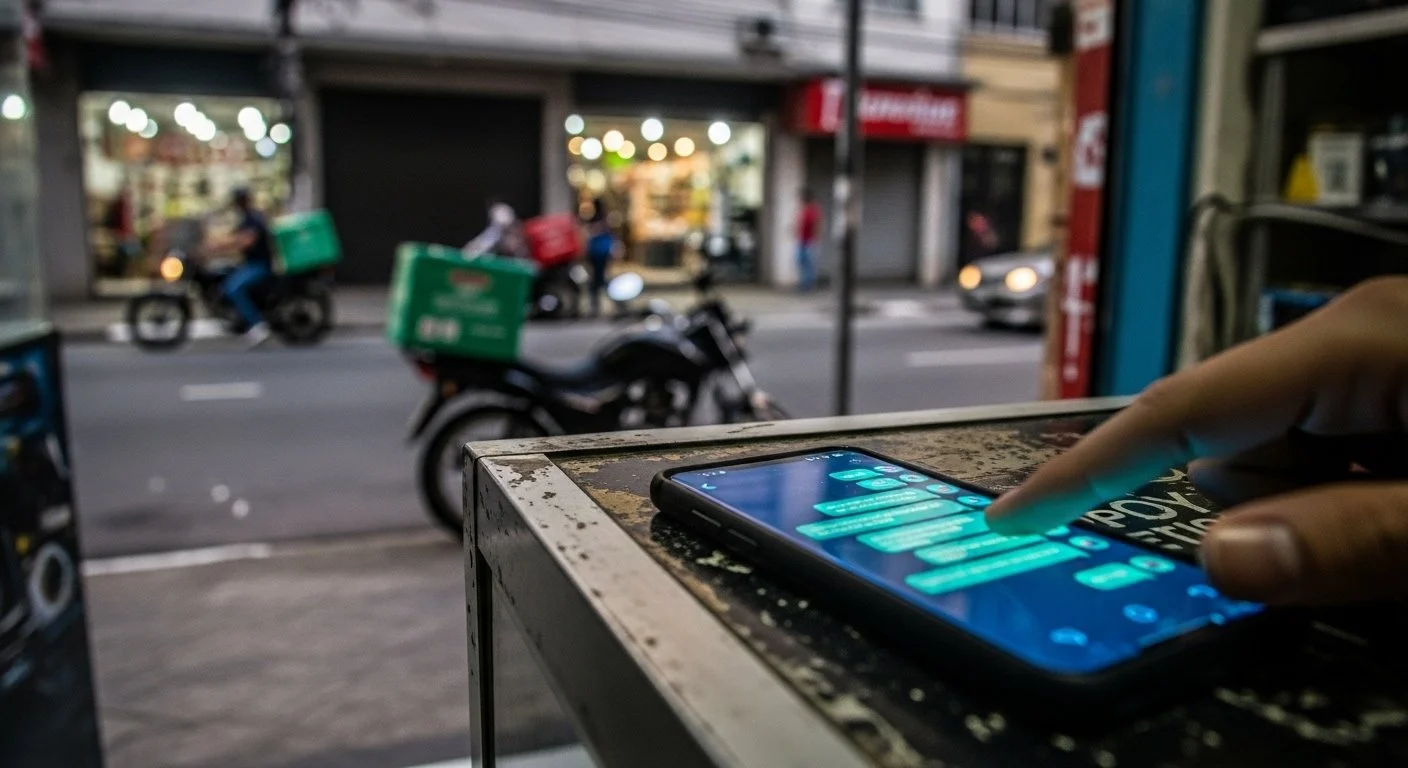
What happened in Brazil is already happening across emerging markets—stablecoins becoming infrastructure for cross-border payments. The question is which country follows Brazil's regulatory playbook next.
Why Lagos, Nairobi and Jakarta should be paying attention
Brazil isn’t unique. It’s just moving faster than most.
Kenya has been wrestling with how to register and tax VASPs. Nigeria has flip-flopped between embracing crypto and restricting it, caught between capital-control anxiety and recognition that informal flows are massive. Indonesia is running experiments with regulated exchanges and futures rules out of Jakarta while everyone knows a lot of the real volume is still moving through Telegram groups and offshore apps.
The pattern is the same everywhere: regulators start by ignoring crypto because it’s small and strange. Then they notice the volume. Then they realise the “weird internet money” is actually competing with their FX regime and their tax base. Then they act.
Brazil’s version of “acting” is instructive because it’s comprehensive. Not a ban (those don’t work). Not selective enforcement (too much room for arbitrage). But a wholesale reclassification: if it functions like FX, it will be regulated like FX and taxed like FX.
For financial institutions across emerging markets – from Lagos to Nairobi to Jakarta – the question isn’t whether this pattern will reach your jurisdiction. It’s when – and whether you’re building systems that can adapt when it does.
The Telegram channels are still running
As of this writing, the P2P networks that match reais to USDT are still operating. They’re just pricing in the coming changes – charging more to cover anticipated compliance costs, being more selective about volume, preparing for a world where visibility means risk.
The small importers will keep importing. They’ll just pay more to do it, or grudgingly go back to banks that are now marginally less painful by comparison. The tax authority will collect revenue it couldn’t touch before. The Central Bank will have data on flows that were previously invisible.
Brazil hasn’t killed the shadow dollar. It’s just insisting that if you’re going to build a parallel rail for moving real economic value, it won’t stay in the shadows for long.
By February 2026, we’ll know whether this approach becomes the model for how emerging markets integrate crypto into their financial systems – or whether it drives activity further underground into channels even harder to monitor.
Either way, the grey zone is closing. And everyone who built a business model on its existence is now doing new math.

For years, the flows were there but invisible – a river of stablecoins running alongside the banking system. Someone in Brasília finally started mapping it.
This is what regulatory convergence looks like in practice – not a dramatic ban, but a quiet reclassification that changes everything. At Anqa, we’re building compliance infrastructure for the institutions caught in this shift, particularly in emerging markets where expectations are rising faster than budgets.